

Stay informed with Chirico Consulting
Welcome to the Chirico Consulting blog, your source for insights on policy, law, and strategic communication. Explore our articles on topics like women in digital and strategic approaches to global cooperation. Discover how we shape policy with purpose.

Invincible Minds: Why the Future of AI Requires a Different Kind of Leadership
Artificial Intelligence is often portrayed as a technological race. Governments compete for computing capacity, companies for proprietary models, investors for the next breakthrough. Yet this narrative overlooks a more consequential transformation. The defining challenge of the AI era is no longer technological alone; it is organisational.
For the first time, technological disruption and regulatory transformation are accelerating simultaneously. Foundation models evolve in a matter of weeks, while governments are redesigning the legal architecture surrounding AI, cybersecurity, data governance and digital resilience. In Europe, the AI Act, the Cyber Resilience Act, NIS2, DORA and an expanding body of sectoral regulation are reshaping the environment in which innovation takes place.
This creates a business landscape unlike any we have experienced before. Organisations are no longer adapting to change; they are operating within continuous change. Success will increasingly depend on their ability to absorb disruption, reconcile competing priorities and make sound decisions under conditions of persistent uncertainty. Agility, resilience and strategic foresight are no longer desirable leadership attributes; they are becoming essential organisational capabilities.
This is what I would call an "invincible mind".
The same shift is needed in the debate on women in STEM and, more broadly, women in digital leadership. For years, the conversation has rightly focused on increasing female participation in science, technology, engineering and mathematics, removing barriers to entry and improving representation across the technology sector. These objectives remain essential. Yet the next frontier lies elsewhere: ensuring that women do not simply participate in technological transformation, but actively shape it.
Artificial Intelligence will not be defined solely by those who build algorithms. It will also be shaped by those who establish governance frameworks, interpret regulation, assess risk, understand markets and anticipate societal consequences. The future of AI will belong to organisations capable of combining technological excellence with strategic judgement.
Recently working on Muteki Group's contribution to the Connecting Women in Digital Best Practice Repository offered an opportunity to reflect on this broader challenge. The exercise was never simply about documenting good practices. It was about identifying the principles that make organisations capable of thriving in an environment characterised by constant technological and regulatory change.
In many respects, Muteki Group embodies this philosophy.
A software development and IT outstaffing company with engineering teams across Europe, Muteki Group delivers solutions spanning custom development, AI integration and cybersecurity, serving organisations across Europe and the MENA region that need to move quickly without sacrificing technical rigour. Its name derives from the Japanese word Muteki (無敵), meaning invincible. Not because uncertainty can be eliminated, nor because disruption can be resisted, but because adaptation becomes part of organisational identity.
In today's AI economy, resilience is no longer measured by stability. It is measured by the capacity to learn faster than the environment changes.
This mindset is reflected in the leadership of CEO Katerina Gurba and COO Viktoriia Maksymova, who have fostered a company where inclusion is understood not as a compliance exercise but as a strategic investment in innovation, creativity and long-term competitiveness.
Today, women represent approximately 20% of Muteki Group's workforce. In a sector that continues to face significant gender imbalance, the figure is encouraging but not the point. More significant is the breadth of their contribution across engineering, operations, business development, strategy and leadership. Diversity creates value only when it translates into influence, responsibility and participation in decision-making.
Innovation rarely emerges from technical excellence alone. It flourishes where engineering meets governance, AI meets ethics, cybersecurity meets public policy, and scientific knowledge is enriched by strategic and multidisciplinary thinking.
My own contribution to this journey comes from that intersection. My academic background is in European law and public policy rather than engineering, an experience that has reinforced my conviction that the future of AI will be shaped by increasingly multidisciplinary teams. Lawyers, economists, behavioral scientists, ethicists, policymakers and engineers will need to work together to govern technologies whose implications extend far beyond code.
As Brussels Representative of Muteki Group, my role is to help connect these worlds: technology with European policy making, innovation with governance, business strategy with institutional dialogue. Likewise, my engagement within the Connecting Women in Digital Forum continues to demonstrate that Europe's competitiveness will depend not only on technological capacity but also on the quality and diversity of the leadership shaping its digital future.
Perhaps this is where the conversation on women in technology should now move. The objective is not simply to bring more women into STEM — important though that remains —but to ensure that women contribute to defining the future of artificial intelligence as engineers, entrepreneurs, executives, researchers, policymakers and strategic advisers. In an increasingly complex world, cognitive diversity is becoming a competitive advantage.
Diversity, therefore, should no longer be framed primarily as an ethical aspiration. It is becoming a strategic advantage.
The organisations that will thrive over the next decade will not necessarily be those asking how AI can replace people. They will be those asking how different forms of intelligence—technical, legal, strategic, scientific and human—can work together to navigate uncertainty, anticipate disruption and build organisations that remain relevant in a world where transformation is the only constant.
Perhaps this is, ultimately, the deeper meaning of Muteki.
Being "invincible" is not about resisting change. It is about cultivating the intellectual agility, resilience and vision to evolve with it.
Women in digital: Insights and analysis
𝗘𝘂𝗿𝗼𝗽𝗲’𝘀 𝗱𝗶𝗴𝗶𝘁𝗮𝗹 𝗳𝘂𝘁𝘂𝗿𝗲 𝘄𝗶𝗹𝗹 𝗯𝗲 𝗯𝘂𝗶𝗹𝘁 𝗲𝗶𝘁𝗵𝗲𝗿 𝘄𝗶𝘁𝗵 𝘄𝗼𝗺𝗲𝗻 — 𝗼𝗿 𝗮𝘁 𝘁𝗵𝗲 𝗰𝗼𝘀𝘁 𝗼𝗳 𝗶𝘁𝘀 𝗼𝘄𝗻 𝗰𝗼𝗺𝗽𝗲𝘁𝗶𝘁𝗶𝘃𝗲𝗻𝗲𝘀𝘀.
Today, women represent just 19% of ICT specialists and around one third of STEM graduates in the EU. Unlocking this untapped potential could generate up to €16 bln annually for the EU economy — strengthening hashtaginnovation capacity and the resilience of the Single Market. 📊🚀
One striking development is the growing ubiquity of gender considerations across the Digital Agenda. From digital skills and AI governance to hashtagcybersecurity and the future of work, gender is no longer a peripheral topic. It is increasingly recognised as a structural dimension of digital policy itself.
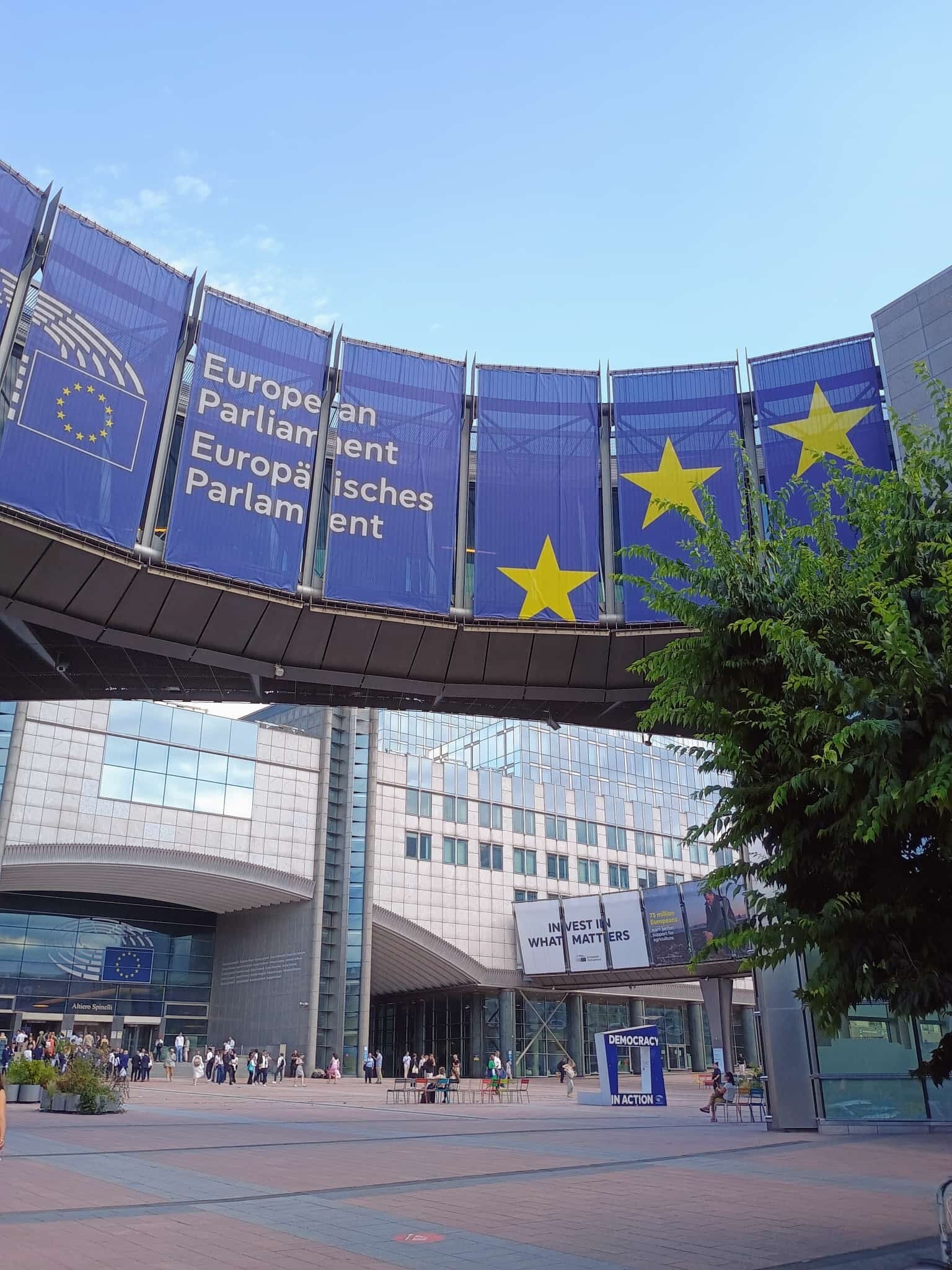
Against this backdrop, it was a pleasure participating in the Connecting Women In Digital and EU Digital & Tech event in Brussels - on the occasion of IWD - and in discussions shaping the next Women in Digital Declaration.
The exchange brought together policymakers, industry leaders, academia, civil society and experts to reflect on how to accelerate the participation of girls and women in ICT and strengthen the Digital Ecosystem. It was particularly encouraging to see the engagement of the EU policy makers including Executive VP Henna Virkkunen and MEP Elena Sancho Murillo.
As a member of the WiD Forum and advisor to women-led companies in digital, I was struck by the shared recognition that digital skills & digital literacy must be understood in a broad sense, encompassing not only technical capabilities, but also responsibility, security awareness and Digital Resilience.
In this context, the Gender Equality Strategy 2026–2030 is particularly welcome. It provides a much-needed policy framework, embedding gender equality across key areas — from education and labour markets to political participation and the digital sphere — while addressing emerging challenges such as cyberviolence and the gender implications of AI.
💡 Here one key takeaway from the discussion.
Progress will require strong cooperation across the entire ecosystem, close coordination between EU and national levels, and an open dialogue guided by a Give-to-Gain approach, recognising that we are partners and allies in a shared endeavour.
On a more personal note, I enjoyed reconnecting with colleagues from the Women4Cyber community🛡️, an indispensable voice in the conversation on women in digital.




Strategic approach to global cooperation
Delve into our analysis of global cooperation strategies, focusing on effective policy and impactful communication. At Chirico Consulting we help stakeholders building bridges and fostering collaboration on a global scale.
_________________
We proudly contributed to the drafting of the White Paper “Mexico’s Legal and Economic Landscape”, with our Managing Director Alessandra Chirico, PhD among the co-authors of the paper. On 26 February 2026, Knowleds convened a strategic discussion in Brussels - at the Embassy of Mexico to Belgium & Luxembourg - Mission of Mexico to the European Union - bringing together investors, business leaders and experts to explore the legal, tax and structural factors shaping Mexico’s role within global markets and supply chains.
The paper is available here: https://lnkd.in/esF-Kfms
_________________
Chirico Consulting remains always open to strategic collaborations: strong networks and converging expertise are essential to navigating complex and fast-evolving global landscapes.


Policy Updates
Stay up-to-date with the latest developments in policy and law with insights from Chirico Consulting. Our expert analysis helps you understand the implications and navigate the complexities of today's regulatory environment. If you want to read more, share our post or even contact us!
___________________
We partnered with Future Collars for a webinar exploring the strategic implications of the AI Act, NIS2 and DORA. The discussion examined how Europe's evolving digital regulatory framework is reshaping governance, cybersecurity, operational resilience and executive accountability. | The webinar recording is available here:
____________________
Check the Cyber Resilience Act Compliance Service for EU Market. CRA Guide in partnership with Muteki Group
Read our latest news
In this space, we share inspiration, tips, and stories that help you get the most out of our services. Whether you're looking for helpful tips, background information, or a behind-the-scenes look: you'll find it all here. We regularly post new articles, so keep an eye on the blog for updates and new insights.
𝐍𝐞𝐮𝐫𝐨𝐭𝐞𝐜𝐡𝐧𝐨𝐥𝐨𝐠𝐲 - 𝐓𝐡𝐞 𝐌𝐢𝐧𝐝 𝐚𝐬 𝐚 𝐒𝐭𝐫𝐚𝐭𝐞𝐠𝐢𝐜 𝐄𝐧𝐚𝐛𝐥𝐞𝐫 𝐚𝐧𝐝 𝐃𝐢𝐬𝐫𝐮𝐩𝐭𝐢𝐯𝐞 𝐅𝐫𝐨𝐧𝐭𝐢𝐞𝐫🧠
The United Nations Institute for Disarmament Research (UNIDIR)’s Innovations Dialogue 2025 is placing neurotechnologies at the intersection of global security, AI 🤖, cybersecurity 🔒, and data governance. Brain–computer interfaces (BCI), cognitive enhancement tools, and emerging neurotech are no longer abstract concepts — they are becoming strategic assets that could redefine military power and global stability 🌍.
Two insights from this debate strike me as especially critical:
1️⃣ 𝑵𝒆𝒖𝒓𝒐𝒅𝒂𝒕𝒂 𝒊𝒔 𝒃𝒂𝒕𝒕𝒍𝒆𝒇𝒊𝒆𝒍𝒅-𝒂𝒅𝒋𝒂𝒄𝒆𝒏𝒕 ⚠️
Misuse of brain-derived information goes far beyond privacy: manipulation, misinformation, and even altered perceptions of reality are plausible. Combined with AI, the risks multiply exponentially. Protecting this data demands cybersecurity frameworks as sophisticated as the technologies themselves.
2️⃣ 𝑻𝒉𝒆 𝒊𝒏𝒏𝒐𝒗𝒂𝒕𝒊𝒐𝒏–𝒓𝒆𝒈𝒖𝒍𝒂𝒕𝒊𝒐𝒏 𝒈𝒂𝒑 𝒊𝒔 𝒘𝒊𝒅𝒆𝒏𝒊𝒏𝒈 ⏳
Neurotechnologies in military hands evolve faster than international norms. Confidence-building measures and early governance models are no longer optional; they are urgent tools to prevent escalation and safeguard global stability.
These discussions resonate with me on multiple levels — not only through my work in emerging technologies, but also through my role as Board Member of NaturalSleep.shop.
It is increasingly evident that there are no real boundaries left between macro systems (global security, data, AI governance) and micro systems (cognition, sleep, mental well-being and neural processes).
Neurotechnology sits precisely at this intersection. 𝑇ℎ𝑒 𝑚𝑖𝑛𝑑 𝑖𝑠 𝑏𝑒𝑐𝑜𝑚𝑖𝑛𝑔 𝑏𝑜𝑡ℎ 𝑎𝑛 𝑒𝑛𝑎𝑏𝑙𝑒𝑟 𝑎𝑛𝑑 𝑎 𝑓𝑟𝑜𝑛𝑡𝑖𝑒𝑟 — something increasingly accessible, measurable, and potentially influenceable. From cybersecurity to AI and neurotech, the systems we design today reach deeper into the human experience than ever before.
✨ If technology is entering the most intimate layers of human life, then safeguarding those layers becomes a strategic priority.
The emerging question is not just what we can build, but how far we should go when the human mind itself becomes part of the technological landscape/race. Understanding and protecting it is crucial: resilience, mental autonomy, integrity, and decision-making depend on it. 🌐💡
Here the event's agenda: unidir.org/ID25